

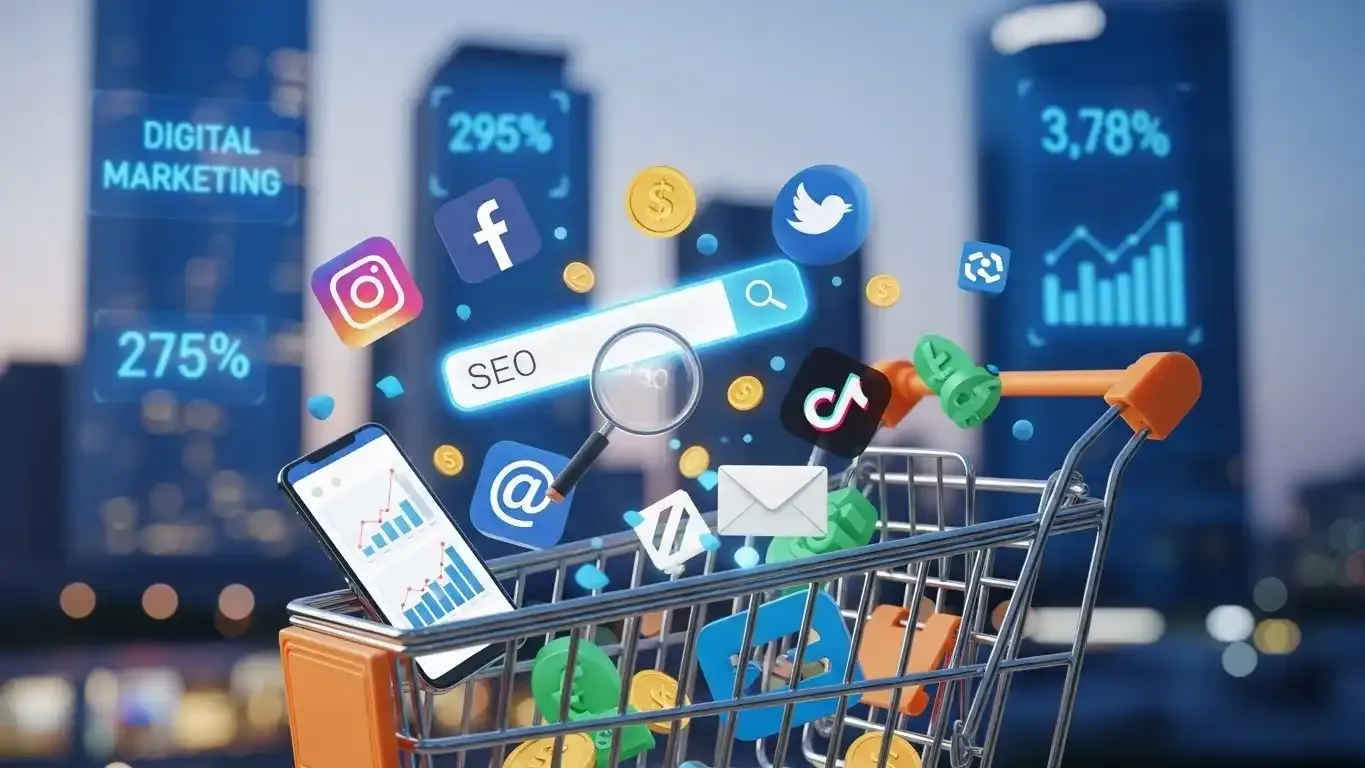
Running an e-commerce business in 2026 is exciting, but also highly competitive. With online shopping expected to cross $8.1 trillion globally by 2026 (Statista), brands that use smart digital marketing strategies will grow faster than those who don’t. The good news is that improving your sales is completely possible with the right mix of creativity, data, and customer experience. Today’s customers buy from brands that feel personal, trustworthy, and easy to interact with across all digital platforms.
One of the biggest game-changers for 2026 is AI-powered personalization. More than 80% of online shoppers prefer brands that offer personalized recommendations. When your website and ads show what customers actually want, your chances of getting a sale increase instantly. This can be done through AI-based product suggestions, smart retargeting ads, and dynamic email campaigns that change based on user behavior.
Social media continues to be a strong sales engine. With platforms like Instagram, YouTube, and TikTok introducing advanced shopping features, brands can now turn simple content into direct sales. Influencer marketing will be even more powerful in 2026. Micro-influencers with 10k–100k followers have up to 60% better engagement than celebrities, making them a more effective option for small and medium businesses.
Another major boost comes from improving your website’s speed and mobile experience. Almost 79% of users won’t buy from a website that loads slowly or looks unprofessional on mobile. A fast, clean, mobile-friendly site can instantly increase your conversion rate. Adding trust badges, customer reviews, and secure payment gateways also builds confidence and reduces drop-offs.
Email marketing is still one of the most profitable channels with an ROI of 4200%. In 2026, automated flows like welcome emails, abandoned cart reminders, birthday offers, and product education emails will help you stay connected with customers and bring them back to buy more. Meanwhile, SEO remains important. Ranking higher on Google increases free traffic and long-term brand visibility. Writing helpful blogs, optimizing product descriptions, and using long-tail keywords can give you a strong edge.
The future of e-commerce belongs to brands that connect emotionally with customers. When you understand your audience, create meaningful content, and use digital marketing tools wisely, scaling your online store becomes easier than ever.
FAQs
1. What are the best digital marketing strategies to boost e-commerce sales in 2026?
The best strategies in 2026 include AI-driven personalization, social commerce, influencer marketing, SEO, email automation, and retargeting ads. Personalization helps show customers relevant products, increasing conversions significantly. Social commerce allows users to shop directly from platforms like Instagram and TikTok, reducing friction. Influencer marketing remains powerful as people trust creators more than traditional ads. SEO ensures long-term free traffic, while email automation nurtures leads and recovers abandoned carts. Retargeting ads bring back visitors who didn’t purchase the first time. Together, these strategies help build trust, improve engagement, and maximize online sales efficiently.
2. How does SEO help my e-commerce store grow?
SEO helps your e-commerce store appear higher in Google search results, bringing consistent organic traffic without paying for ads. When people search for products you sell, ranking high increases your visibility. Optimizing product descriptions, titles, and images ensures Google understands your content clearly. Adding blogs builds authority and answers customer questions. Long-tail keywords help target specific buyers ready to purchase. Fast website speed and mobile optimization improve user experience and search rankings. Over time, SEO reduces your customer acquisition cost because you don’t need to rely heavily on paid campaigns for traffic.
3. Why is social media important for e-commerce in 2026?
Social media is crucial because people spend more than 2.5 hours per day on platforms like Instagram, YouTube, and TikTok. These platforms now support shop integrations, live shopping, and influencer collaborations. Social media builds brand awareness and emotional connection, which helps customers trust your products. Short-form content like reels and shorts drives engagement and can easily go viral. Social media ads are highly targeted, showing your products to people who are most likely to buy. In 2026, customers prefer interactive content, creator-driven products, and seamless buying experiences, all of which social media provides.
4. How can I use AI to increase e-commerce sales?
AI helps you understand customer behavior, personalize marketing, and automate repetitive tasks. You can use AI for product recommendations, personalized emails, dynamic pricing, and predictive analytics. For example, AI can analyze what users look at and suggest similar items, increasing average order value. Chatbots powered by AI provide instant support, reducing drop-offs. AI can also forecast demand, helping you manage stock better. In 2026, AI-driven retargeting ads will improve accuracy and reduce wasted ad spend. By automating decision-making and improving customer experience, AI boosts conversions more efficiently than manual methods.
5. How can I reduce cart abandonment on my online store?
To reduce cart abandonment, focus on improving user trust and checkout experience. Offer multiple payment options like UPI, COD, wallets, and credit cards. Make your checkout smooth with fewer steps and auto-fill options. Display trust badges such as SSL certificates and secure payment icons. Add customer reviews and social proof to build confidence. Use abandoned cart email sequences with reminders and small discounts to bring users back. Ensure your website loads fast, especially on mobile. Providing a clear return policy, transparent shipping charges, and 24×7 support can also reduce cart abandonment significantly.