

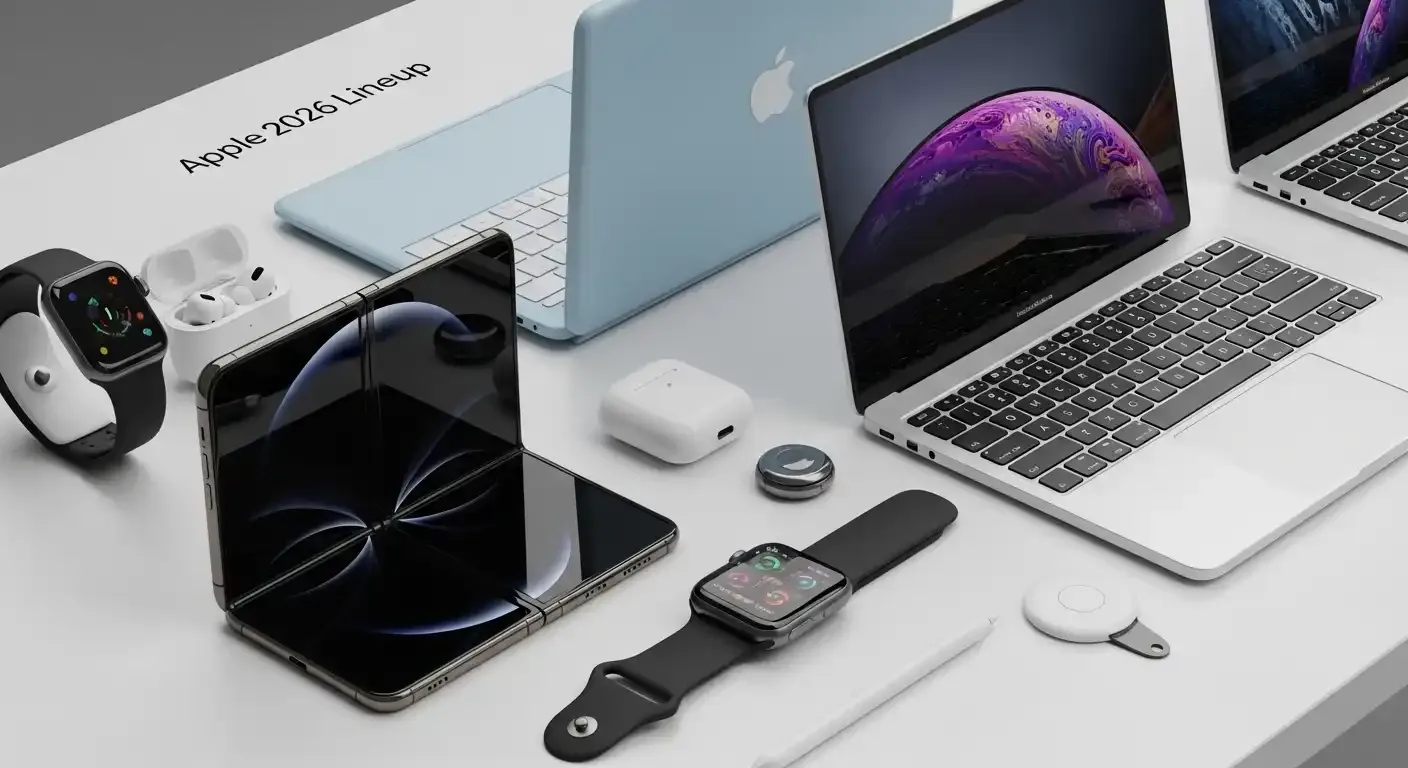
If there is one thing that technology enthusiasts have come to expect from Apple, it is a calculated, often safe approach to product releases. However, leaked reports suggest that the tech giant is completely changing its strategy. Apple is reportedly launching more than 20 new products in 2026, marking a significant departure from its usual playbook. From highly anticipated foldable smartphones to budget-friendly laptops that aim to disrupt the PC market, Apple is officially going all-in this year.
At Sprite Genix tracking the latest tech industry trends, we have analyzed the most recent leaks regarding Apple's massive 2026 hardware roadmap. Here is everything you need to know about the upcoming devices, their expected specifications, and how they might reshape the consumer technology landscape.
Breaking Into the Budget PC Market: The New Mac Lineup
Historically, Apple has positioned itself as a premium brand, but 2026 will see the company making things very uncomfortable for budget Windows laptops. The standout release is an all-new budget MacBook, which is expected to launch at an aggressive price point of around 50k.
To keep costs down while still supporting macOS and its full suite of applications, Apple will power this budget laptop with the A18 Pro chip, the same processor found in the iPhone 16 Pro. Design-wise, consumers can expect a nostalgic return to form; the new laptop will feature a smaller 12-inch LCD display and a chassis heavily inspired by the iconic 12-inch MacBook and the older MacBook Air M1. Because it is a brand-new release, buyers will also benefit from long-term software update support.
But the Mac updates do not stop there. The Mac Mini, heavily regarded as the ultimate value-for-money Mac, is receiving a major internal upgrade with the new M5 chip. Thankfully, Apple is reportedly keeping the same "awesome 60k price tag" for the Mini. An M5 MacBook Air is also on the slate for this year, alongside new Mac displays and an upgraded Mac Studio 2 expected in the middle of the year.
For power users, Apple is saving its biggest reveal for late 2026: an OLED MacBook Pro. This premium machine is rumored to feature a massive redesign, including a potential touchscreen, a new 2-nanometer M6 chip, and a punch-hole camera that finally replaces the controversial screen notch.
Revamping the iPad Roster: More Power and Intelligence
Apple's tablet lineup is also receiving a comprehensive overhaul. The base model iPad (12th generation) is getting fixed to address the common complaints of the 11th-generation model, such as its non-laminated screen and lack of AI features. The new 12th-gen iPad will feature an A18 or A19 chip, increased RAM for a major performance jump, and full support for Apple Intelligence.
The mid-range iPad Air is stepping up to the new M4 chip, but the most radical changes are reserved for the iPad Mini. The upcoming Mini will boast an OLED display, the powerful A19 Pro chip, and a completely seamless design. Leaks indicate the new iPad Mini will feature vibration-based speakers with "no holes this time" and may even receive an official IP68 water and dust resistance rating.
The iPhone Evolution: The 17E, Pro Exclusives, and the Foldable Future
Apple’s smartphone strategy in 2026 is both surprising and innovative. Early in the year, Apple is expected to drop the iPhone 17E. Despite the mixed reactions to past budget models, the 17E is packing significant upgrades, including the A19 chip, thinner bezels, the Dynamic Island, a new front camera, and the return of MagSafe. However, in classic Apple fashion, it will retain a 60Hz display and a single rear camera to separate it from the premium tiers.
Speaking of premium, there are credible reports that Apple will cancel the base model iPhone 18 entirely this year, opting to strictly release iPhone 18 Pro models. These high-end devices will feature the cutting-edge 2-nanometer A20 Pro chip, new colors, under-screen Face ID, punch-hole cameras, and a variable aperture main camera.
Yet, the most anticipated smartphone release is undoubtedly the iPhone Fold. Apple is finally entering the foldable arena to compete directly with Samsung, utilizing Samsung's latest creaseless screen technology.
Expanding the Ecosystem: Smart Wearables and Home Hubs
Beyond traditional computing, Apple is vastly expanding its footprint in smart home gadgets and wearables. Taking aim at the popular Ray-Ban Meta glasses, Apple is developing its own smart glasses. While this first iteration will not include a digital display, the glasses will be packed with built-in speakers, cameras, sensors, and robust AI features.
Apple's smart home division is also seeing massive investments. To compete with security camera giants, Apple is releasing its own smart security camera equipped with Siri integration, advanced face and motion detection, and a stringent focus on privacy.
In the living room, Apple is taking on the Google Nest Hub and Amazon Echo Show with a brand-new HomePod hub. This device will feature a 7-inch display, an A18 chip, a built-in FaceTime camera, and Apple Intelligence. With Siri allegedly getting smarter through potential Gemini integrations, this hub aims to dominate the home display market, especially since competitor devices have suffered from lag or limited regional availability. A standard HomePod Mini 2 is also in the works.
Lastly, the critically underrated Apple TV 4K is getting a massive upgrade. Powered by the A17 Pro chip, the new Apple TV will include Apple AI, a FaceTime camera, and the horsepower to run AAA video games, essentially transforming it into a mini gaming console for your living room.
The 2026 Release Timeline
With over 20 products launching, Apple has established a strict release timeline:
• Early 2026: The rollout has already begun with the release of the AirTag 2, which features enhanced range, more accurate precision finding, and louder speakers at the same price. This will be followed shortly by the iPhone 17E, the budget MacBook, new iPads, the Home Hub, HomePod Mini 2, and the upgraded Apple TV.
• Mid 2026: Focus will shift to desktop professionals with the launch of the new Mac Studio and Mac displays.
• Late 2026 (The Big Launch Season): The fall hardware event will introduce the iPhone 18 Pros, the iPhone Fold, Apple Watch Series 12, Apple Watch Ultra 4, and AirPods 5.
• End of Year: Apple will close out 2026 with its premium flagship devices, including the OLED MacBook Pro, smart glasses, and the smart security camera.
Ultimately, 2026 is shaping up to be one of the most transformative years in Apple’s history. Whether you are looking for an ultra-affordable MacBook or a cutting-edge foldable iPhone, the tech industry is about to experience a massive shift.
Frequently Asked Questions (FAQs)
1. Is Apple releasing a budget laptop in 2026?
Yes, Apple is expected to launch a budget MacBook priced around 50k. It will feature a 12-inch LCD screen, a design similar to the MacBook Air M1, and an A18 Pro chip from the iPhone 16 Pro to keep costs down while perfectly supporting macOS.
2. Will there be a standard iPhone 18 this year?
According to current reports, there will be no standard iPhone 18 model in 2026. Apple is expected to exclusively launch the iPhone 18 Pro models, which will feature an advanced 2-nanometer A20 Pro chip, punch-hole cameras, and under-screen Face ID.
3. Is Apple finally releasing a foldable phone?
Yes, the highly anticipated iPhone Fold is set to launch in 2026. The device is reported to use a new "creaseless screen" manufactured by Samsung, allowing Apple to finally compete in the foldable smartphone market.
4. What new smart home gadgets is Apple making?
Apple is vastly expanding its smart home lineup in 2026. Upcoming products include a privacy-focused smart security camera, a HomePod Mini 2, and a new HomePod hub featuring a 7-inch display, an A18 chip, and a built-in FaceTime camera.
5. Are the rumored Apple smart glasses coming out soon?
Yes, Apple is actively working on its own smart glasses to compete with the Ray-Ban Meta. While this initial version will not feature a visual display, it will be equipped with cameras, speakers, sensors, and robust AI integrations.
Category: Tech Industry Trends