

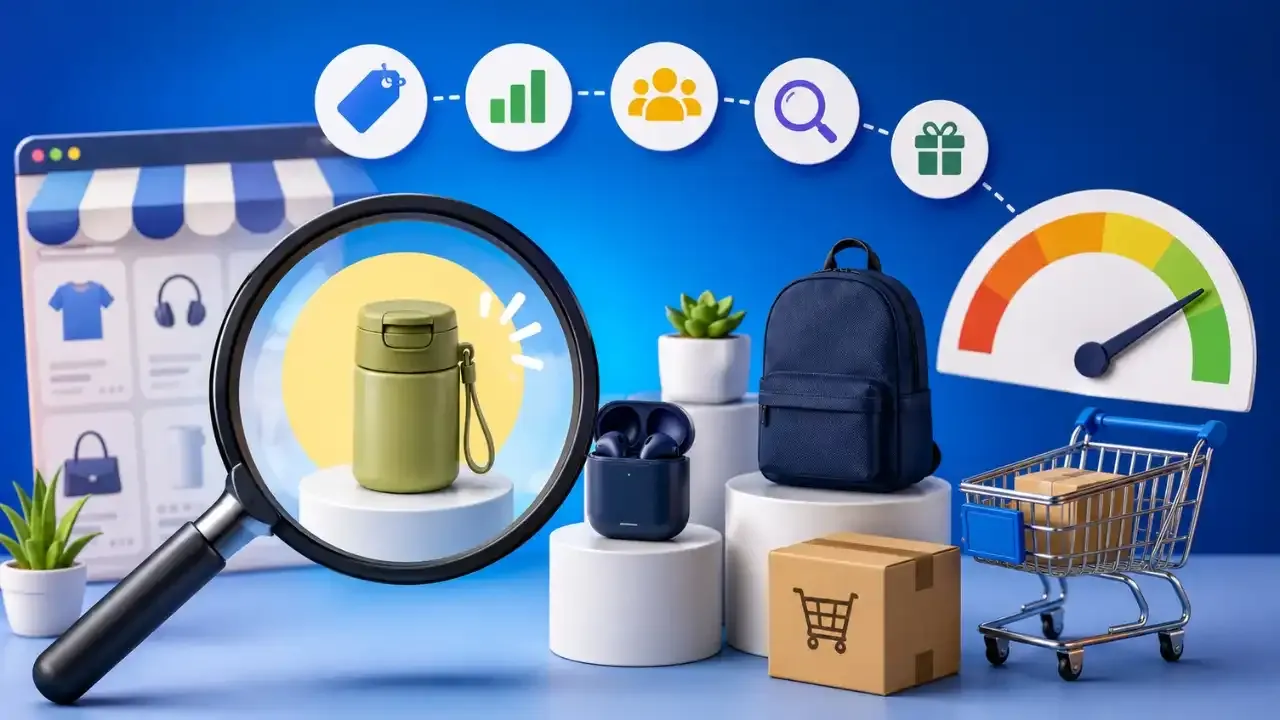
Are you struggling to start your e-commerce journey because every niche feels oversaturated and impenetrable? Finding the right product to sell is the absolute cornerstone of online retail success. If you blindly list a product without analyzing the market saturation, your inventory might sit in a warehouse forever without generating a single order. At Sprite Genix, we have seen countless entrepreneurs stall simply because they skipped the foundational step of targeted product research.
The good news? You do not need an arsenal of expensive, premium software to validate your niche ideas. Through strategic, manual product research, you can uncover highly lucrative opportunities at zero cost. While paid tools offer deeper analytics, manual platform research gives you a realistic, unfiltered view of the market landscape.
In this comprehensive guide, Sprite Genix will walk you through five practical, data-driven methods to find low competition products for your e-commerce business using standard marketplace data.
Why Your E-commerce Business Needs Low Competition Products
When you enter a saturated market, you are immediately forced into aggressive price wars and massive advertising budgets just to be seen. By focusing on low competition products, you secure better profit margins, enjoy cheaper cost-per-click (CPC) rates, and build organic rankings much faster.
Instead of fighting massive brands for standard keywords, your goal is to find the hidden gaps in the market. Let’s dive into how you can manually analyze any marketplace to find these highly profitable, low-stress items.
5 Free Methods for E-commerce Product Research
1. Evaluate Total Search Results on Major Marketplaces
The simplest way to gauge market saturation is by analyzing the raw number of search results on major platforms like Amazon. Marketplaces act as massive search engines, giving you real-time data on active sellers.
For example, if you decide you want to sell a standard item and search for the broad keyword "bedsheet," you will likely see upwards of 50,000 listed products on the results page. This massive number is a giant red flag indicating extreme market saturation. Competing against 50,000 existing listings means your product will be buried under dozens of pages of established brands with thousands of reviews.
Key Takeaway: To find low competition products, you must utilize "long-tail keywords." Instead of broad terms, search for highly specific variations of a product. Your initial product research must yield a smaller, manageable number of search results to ensure viability.
2. Analyze the Density of Sponsored Advertisements
Search volume is only the first metric. Next, you must evaluate the financial landscape of the category. When you search for a potential product keyword, pay close attention to the number of sponsored ads dominating the first page.
If you scroll through the search results and see continuous rows of sponsored placements, proceed with extreme caution. High ad density means that established sellers are aggressively bidding on that keyword to maintain their rankings. In such categories, the bidding rate for ads will be exorbitantly high, making it a very expensive keyword to target.
To scale your e-commerce business, you will eventually need to run paid ads to generate consistent traffic. If the market is already dominated by expensive sponsored placements, your customer acquisition cost will decimate your profit margins. True low competition products feature far fewer sponsored ads, allowing you to bid at a highly cost-effective rate.
3. Monitor Active Deals and Discount Frequencies
A highly competitive market often forces sellers into a desperate race to the bottom regarding pricing. You can easily identify this toxic environment by checking the frequency of promotional badges on the search results page.
When conducting your product research, observe how many top-ranking listings are running "Limited Time Deals" or steep discount promotions. If a significant portion of the page features these badges, it clearly indicates that sellers are sacrificing their margins just to maintain visibility and clear out inventory.
For a sustainable e-commerce business, you must avoid categories heavily dependent on continuous promotions. Unearthing low competition products means finding niches where customers gladly pay full retail price for the value provided, rather than simply hunting for the cheapest available option.
4. Assess Sales Volume Depth in Best Seller Ranks
Many beginners make the fatal mistake of only looking at the number one best-seller in a category. To accurately identify low competition products, you must analyze the sales depth across the top 50 to 100 listings.
For instance, the top-ranking product in a specific category might be generating over 2,000 orders. The second position might generate 900 orders, and the third 400 orders. However, if you scroll down to the 50th position and notice they are only generating 100 orders despite the high search volume and fierce keyword competition, the market is extremely top-heavy. This indicates that all consumer demand is being absorbed by a few elite players, leaving scraps for new entrants.
Furthermore, always check the number of active sellers on a single listing. If a popular item has multiple different sellers fighting for the exact same buy box, you will struggle to establish a foothold. Validated low competition products offer a balanced, healthy distribution of sales across the first few pages of search results without overcrowded multi-seller listings.
5. Leverage Review Mining for Quality Control
The ultimate way to secure a foothold in low competition products is by differentiating your brand through vastly superior quality. You can discover incredible product opportunities simply by reading the 1-star reviews of current top-selling items.
Look for recurring complaints and functional failures. For example, customers might frequently complain that a bedsheet's fabric "tore at one spot after just two days". These negative reviews are an invaluable roadmap for your product research. They explicitly tell you exactly how to engineer a better item.
Never launch a product with known quality defects just because it is cheap to source. If you would not purchase the item for your own family, you have no business selling it to the public. Have your friends and relatives test free samples of your improved prototype to gather honest, critical feedback. Once you achieve true market fit with an impeccable, high-quality product, you will naturally bypass the competition, earn stellar organic reviews, and secure long-term success.
Accelerate Your E-commerce Business with Sprite Genix
Successfully identifying low competition products is just the first strategic step in your entrepreneurial journey. To truly dominate the market, successfully list your products, and rapidly scale your e-commerce business, you require a holistic, data-driven digital strategy.
At Sprite Genix, our expert team specializes in high-ranking SEO content, cutting-edge web development, and targeted SEM strategies designed to elevate your brand above the noise. Stop guessing and start scaling. If you are ready to turn your product research into a highly profitable online storefront, let our industry-leading experts handle the technical heavy lifting.
FAQs
Q1: What are low competition products?
A1: Low competition products are niche items with steady consumer demand but fewer active sellers. Targeting these products allows your e-commerce business to rank faster, spend less on advertising, and maintain healthier profit margins.
Q2: Why should I avoid niches with high sponsored ad density?
A2: A high density of sponsored ads indicates that established sellers are locked in a fierce bidding war. This drives up the Cost-Per-Click (CPC), meaning you will likely exhaust your marketing budget before securing consistent sales.
Q3: How do "Limited Time Deals" affect my product research?
A3: Frequent discounts and deals on page one signify a market driven by price wars. Entering such a competitive space forces you to slash your own prices, which will severely erode your business's overall profitability.
Q4: Do I need expensive software to find profitable products?
A4: No, you do not need paid tools to get started. You can manually analyze marketplace data—such as total search results, ad density, and best-seller depth—to reliably find low competition products completely for free.
Q5: How can reading negative reviews help my business?
A5: Analyzing 1-star reviews reveals the exact flaws in your competitors' products. You can leverage this feedback to source a significantly higher-quality product, instantly differentiating your brand and securing organic market share.
Ready to dominate your niche?
Contact Sprite Genix Today to discover how our tailored SEO, web development, and digital marketing services can exponentially grow your e-commerce business. Let's build your success story together!
Category: E-commerce Growth