

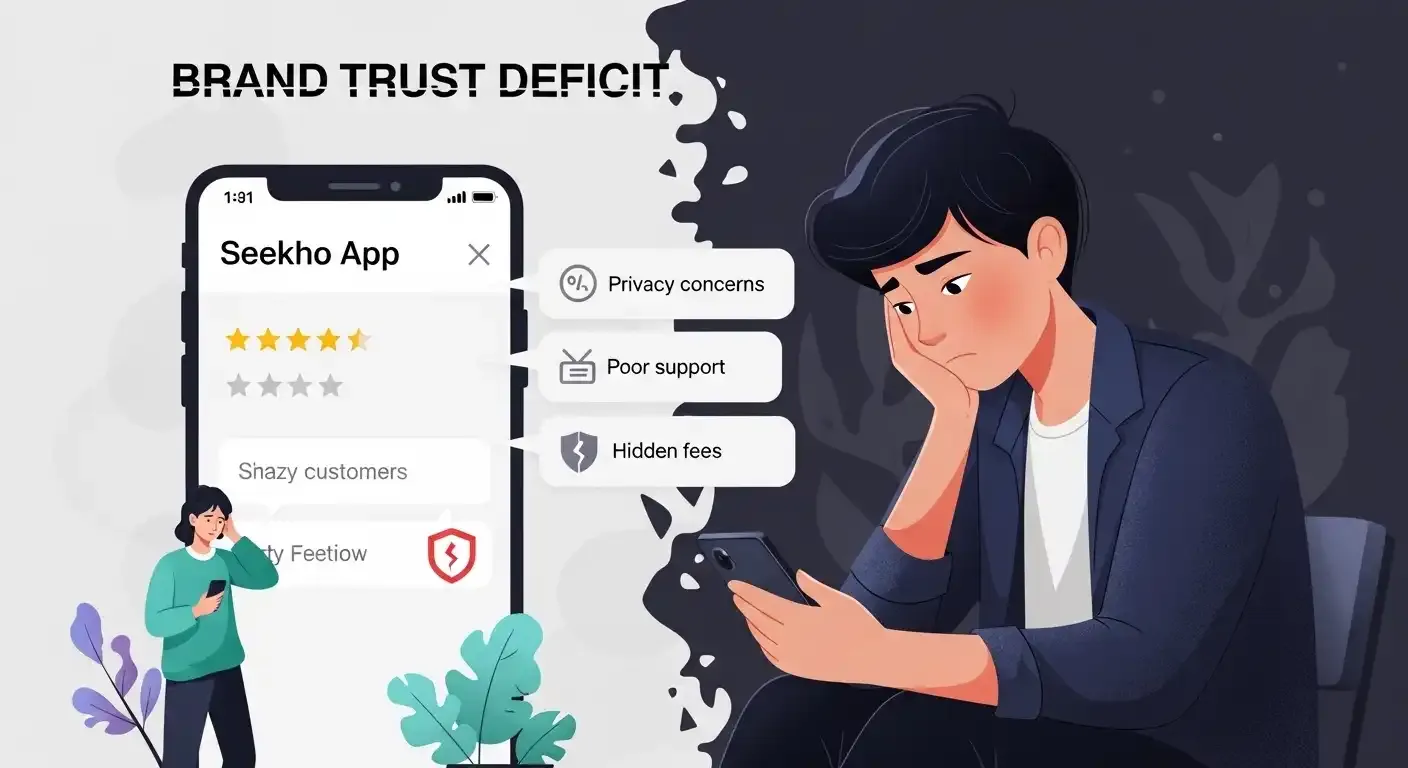
As a digital marketer, analyzing hyper-growth startups is always fascinating. At Sprite Genix, our team continuously evaluates emerging digital marketing strategies to understand what drives sustainable growth. Today, we are unpacking the Seekho App, an ed-tech platform that promised to revolutionize skill development for middle-class Indians.
While the platform successfully engineered massive downloads and revenue, its over-reliance on manipulative marketing created a significant gap between user expectations and product reality. This Seekho App case study serves as a crucial lesson for modern brands on why sacrificing brand trust for rapid acquisition is a flawed long-term strategy.
The Genesis: Identifying a Market Gap During a Crisis
To understand the explosive rise of the Seekho App, we must look back at 2020. During the lockdown, professionals faced immense uncertainty regarding job security, salary cuts, and fresh placements. The dominant narrative across the country was simple: upgrade your skills to survive.
However, beginners faced a fragmented learning ecosystem. While platforms like YouTube offered endless free resources, they lacked a structured path, leaving users confused about where to start and how to track their progress.
Recognizing this gap, founders from IIT Kanpur conceptualized the Seekho App to serve the aspirations of middle-class Indians earning between ₹10,000 to ₹15,000 a month. Their initial value proposition was brilliant and grounded in solid digital marketing strategies:
• Bite-Sized Learning: Delivering educational content in short, 5-minute vertical video formats designed for mobile users.
• Structured Pathways: Promising a clear, step-by-step learning sequence from basic to advanced levels.
• Regional Accessibility: Offering content in simple Hindi—and later Tamil and Telugu—to cater to audiences uncomfortable with heavy English theory.
• Smart Scrolling: Promoting the idea of replacing mindless "doom scrolling" with productive learning.
Aggressive Acquisition and Funding Triumphs
Initially, the Seekho App executed a flawless market penetration strategy. They started with free access before introducing highly affordable subscription models, transitioning from ₹199 to ₹599 annually.
The user base skyrocketed. By mid-2022, the app had secured 3 lakh users and generated its first ₹4 lakh in revenue. This explosive growth attracted massive venture capital, including $3 million from Elevation Capital, $8 million from Lightspeed, and eventually a massive $28 million round from Bessemer and Goodwater.
Armed with deep pockets, the platform scaled its operations, expanding into diverse categories like finance, business, agriculture, and even astrology. Reports indicated they reached 20 lakh paid users, an annual revenue run rate of ₹150 crore, and set an ambitious target of ₹600 crore.
The Downfall: When Manipulative Marketing Takes Over
Growth powered by venture capital is impressive, but true business sustainability requires brand trust. As the Seekho App chased aggressive revenue targets, their advertising took a dark turn. Instead of highlighting genuine product value, their digital marketing strategies morphed into manipulative marketing campaigns heavily targeting Tier-3 and Tier-4 cities.
Exploiting User Insecurities
The brand began running highly sensationalized, often contradictory advertisements that preyed on the vulnerabilities of their audience. Examples of their manipulative marketing include:
• Get-Rich-Quick Schemes: Ads promising users they could multiply their stock market investments by 5x to 10x overnight or become wealthy just by spending 15 minutes a day on the app.
• Unrealistic Timelines: Claiming that users of any age could master fluent English in just 7 days.
• Targeting the Vulnerable: Running specialized ads targeted at single mothers struggling financially, promising them instant home-based income, or suggesting that children no longer need traditional schooling if they use the app.
• Bizarre Value Propositions: Marketing "courses" on mundane tasks like booking train and ship tickets, or resolving personal debt through astrology.
These ads successfully triggered FOMO (Fear of Missing Out) and forced millions to download the app, but they fundamentally destroyed the app's educational credibility.
Marketing vs. Product: The Content Depth Reality
The ultimate failure in the Seekho App's ecosystem was the glaring disconnect between its loud marketing and its hollow product. When users—expecting to learn complex skills like public speaking or stock trading—paid for the subscription, they were met with severe disappointment.
Instead of the promised expert-led, structured learning, users found surface-level "hacks" and motivational tips. For example, a public speaking course would offer basic confidence tips but lacked any framework for speech preparation, practice, or personalized feedback.
Skill development requires understanding basics, deliberate practice, and feedback loops. Because the platform relied on generic creators rather than vetted experts, the educational value was superficial. This resulted in users experiencing a "false sense of progress"—feeling productive for a month but realizing no real-world skill enhancement had occurred. Consequently, users churned, and the brand's reputation plummeted.
Key Lessons for Your Digital Marketing Strategies
At Sprite Genix, we emphasize that marketing is meant to open doors, but your product must keep people inside. The Seekho App case study provides several vital lessons for modern brands:
1. Align Ad Copy with Product Reality: If your marketing makes promises your product cannot keep, your marketing becomes the villain. Always ensure your digital marketing strategies reflect the authentic value of your offering.
2. Avoid Manipulative Marketing: Preying on consumer insecurities might yield short-term spikes in conversion rates, but it permanently damages brand trust. Today’s consumers are savvy; treating them poorly will result in severe brand degradation.
3. Growth Does Not Equal Trust: You can buy growth through funding, aggressive ads, and influencer pushes, but trust is strictly earned through impact and consistent results.
Frequently Asked Questions (FAQs)
1. What is the Seekho App?
The Seekho App is an ed-tech platform launched around 2020 that provides short, 5-minute educational videos in regional languages to help users upgrade their skills.
2. Why did the Seekho App face backlash?
The platform faced heavy criticism due to a massive gap between its aggressive, manipulative marketing ads and the actual surface-level, hollow content provided inside the app.
3. What kind of manipulative marketing did Seekho App use?
They ran contradictory ads promising unrealistic results, such as 10x stock market returns, learning English in 7 days, and targeting vulnerable groups like single mothers and people in debt.
4. Was the Seekho App financially successful?
Yes, despite the product flaws, the app successfully scaled to 20 lakh paid users and hit a massive ₹150 crore in annual revenue through heavy ad spending and Tier-3 city targeting.
5. What is the main takeaway from the Seekho App case study?
The core lesson is that while aggressive advertising can drive initial user acquisition, long-term brand trust and retention require an authentic product that actually delivers on its marketing promises.
Are you tired of manipulative marketing tactics that harm your brand's reputation? At Sprite Genix, we believe in driving sustainable, high-ROI growth through ethical, data-driven digital marketing strategies. We align your brand messaging with real value, ensuring you don't just win clicks, but you win loyal customers. Contact Sprite Genix today to build a brand presence that scales with integrity!
Category: Case Studies and Success Stories