

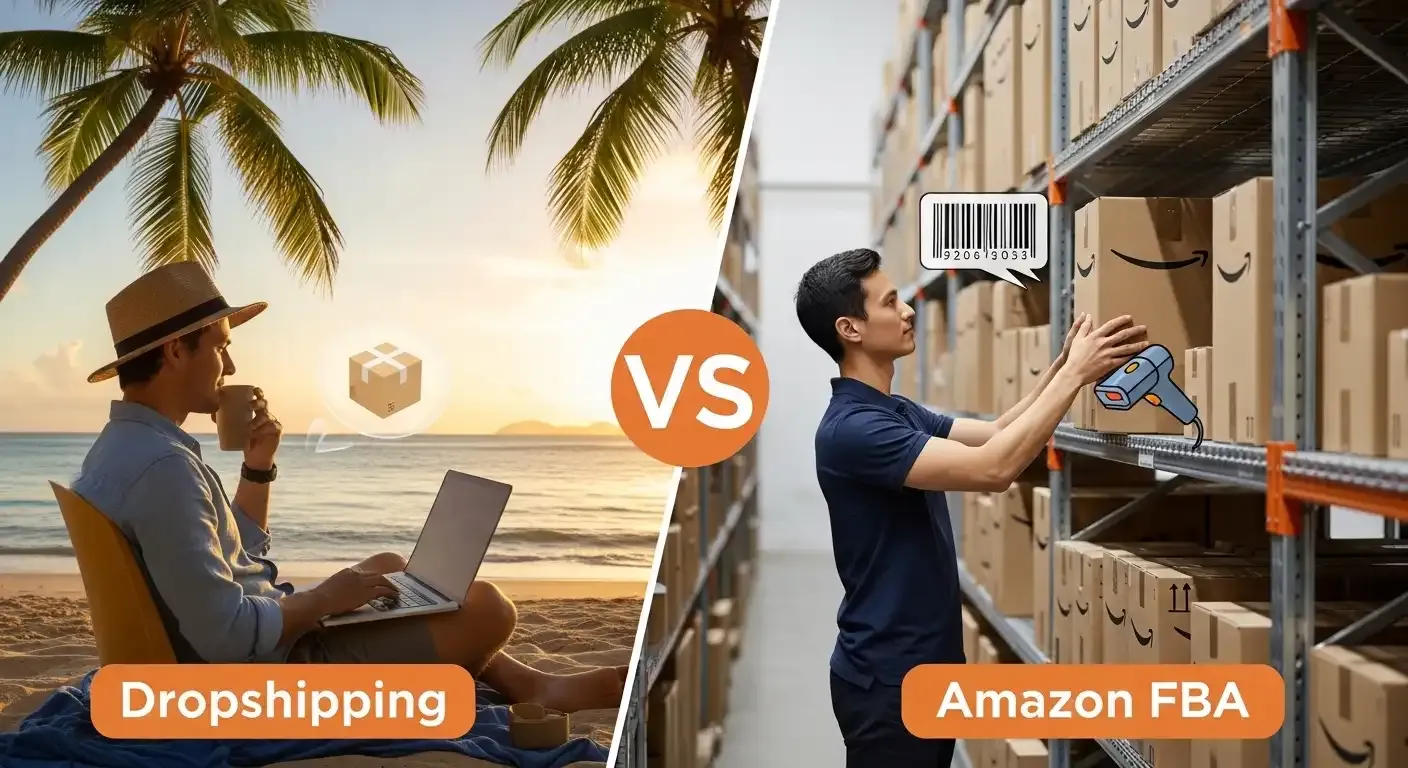
In the fast-paced world of digital entrepreneurship, the dream of running a business without holding inventory is incredibly appealing. For aspiring entrepreneurs, two models dominate this conversation: Dropshipping and Amazon FBA (Fulfillment by Amazon). Both promise a hands-off approach to logistics, yet they differ fundamentally in how they generate value, profit, and long-term sustainability.
If you are looking to build trust, create a genuine business, and play the long game, you might be wondering which path will actually generate reliable income. Based on industry insights and a critical look at the current e-commerce landscape, this guide explores why the "easy" route might be a trap and why building a brand is the superior choice.
The Allure of Dropshipping: Too Good to Be True?
When you search for "how to start an online business" on YouTube, you are bombarded with creators showcasing massive results in record time. You might see titles claiming, "I made 1 crore in sales in 7 days," or gurus promising to teach you how to build a store for ₹20.
The model sounds simple on paper:
1. Create a website on Shopify.
2. List products from a wholesaler.
3. Run Meta (Facebook/Instagram) Ads to drive traffic.
4. When an order comes in, the supplier ships it.
However, there is a dark side to dropshipping that is often ignored. Many of these "gurus" show revenue numbers without revealing net profit, primarily to sell you a ₹20,000 to ₹25,000 training course at the end of their video. They sell the dream of quick money, targeting a young demographic (ages 18–24) that is eager for fast cash.
The Reality Check: Why Dropshipping Often Fails
While the entry barrier is low, the operational reality of dropshipping especially in markets like India is brutal.
1. The Ad Spend Trap
The biggest hurdle is customer acquisition. You are told to simply "run ads," but targeting the right audience is complex and expensive. Investing ₹300 or ₹500 a day rarely yields results. Many aspiring dropshippers end up burning through thousands of rupees in Meta Ads without understanding their audience, leading to significant financial loss.
2. The Nightmare of Returns and RTO
In India, the prevalence of Cash on Delivery (COD) creates a massive bottleneck. Even if you secure an order, there is a high chance of rejection or delay because suppliers may not dispatch on time. If a customer returns a product, the burden falls on you, not the supplier. You pay for the shipping, the return, and the wasted ad spend, while the supplier loses nothing.
3. Lack of Brand Ownership
Ultimately, dropshipping makes you a middleman for someone else's product. You are selling a generic item that belongs to a supplier. You spend your money and effort to generate sales for them, leaving you with no tangible asset or brand identity at the end of the day.
The Case for Amazon FBA and Brand Building
Contrast this with Amazon FBA, where you send your inventory to Amazon’s warehouses. While this requires an upfront investment in stock and GST registration, it aligns you with a marketplace that already has customer trust.
Building a Long-Term Asset
The core advantage of Amazon FBA is the ability to accumulate social proof. When you sell a product and receive positive reviews, those reviews stay with your listing forever. A product with good ratings will continue to generate orders years down the line, creating a cycle of repeat business.
In dropshipping, you are constantly hunting for the next "winning product." With FBA, you are building a Direct-to-Consumer (D2C) brand. As you grow, you gain ownership. You can eventually expand to your own website, host events, and even attract funding or IPO opportunities because you own the brand identity.
The "Shark Tank" Lesson
Consider the entrepreneurs who appear on shows like Shark Tank. They rarely pitch a dropshipping store. Instead, they proudly discuss their sales on Amazon and their own websites. They don't say, "I started dropshipping and switched." They built a brand from day one because switching from a dropshipping model to a brand later is incredibly difficult once your capital is drained.
The 1000-Day Rule for Success
Success in e-commerce is not about "quick money." It requires patience and a shift in mindset. There is a business saying: "Test a business for 999 days. If it doesn't work, close it on the 1000th day.".
If a business survives that period, it becomes an established entity (a "Pedhi") that can last for generations. Dropshipping appeals to those wanting instant gratification, whereas building a brand on Amazon or your own site is for those willing to invest time to build a legacy that makes their family proud.
Where Should You Invest?
If you want to gamble your luck, you can try dropshipping, but be prepared for high risks and low rewards. However, if you want to safeguard your capital and build a real future, avoid the dropshipping hype.
Focus on:
• Getting your GST and paperwork in order.
• Sourcing a small inventory of high-quality products.
• Leveraging Amazon FBA for logistics and trust.
• Building your own website to capture long-term customers.
Don't waste your parents' hard-earned money on a model that benefits the "gurus" more than it benefits you. Build an identity, not just a store.
Frequently Asked Questions (FAQ)
1. Is dropshipping a good business model for beginners in India?
No, it is generally considered risky for beginners due to high ad costs, fierce competition, and logistical issues like high Cash on Delivery (COD) failures and returns, which can lead to financial losses.
2. What is the main difference between Dropshipping and Amazon FBA?
In dropshipping, a third party ships products to customers and you hold no stock. In Amazon FBA, you send your own inventory to Amazon's warehouses, and they handle storage, packing, and delivery, allowing you to build a reputable brand.
3. Can I start dropshipping first and switch to a brand later?
It is highly not recommended. Most entrepreneurs find they cannot switch because the dropshipping model drains their capital through ad spend and returns before they can establish a foothold. It is better to start building a brand immediately.
4. Why do many YouTubers promote dropshipping if it is not profitable?
Many creators promote dropshipping to sell expensive training courses. They show revenue figures (sales) rather than net profit to make the business model look easier and more lucrative than it actually is.
5. How long should I expect to work on my e-commerce business before succeeding?
You should adopt a long-term mindset. A popular rule of thumb is to commit to testing and building your business for at least 999 days to turn it into an established, sustainable entity.
Category: E-commerce Growth