

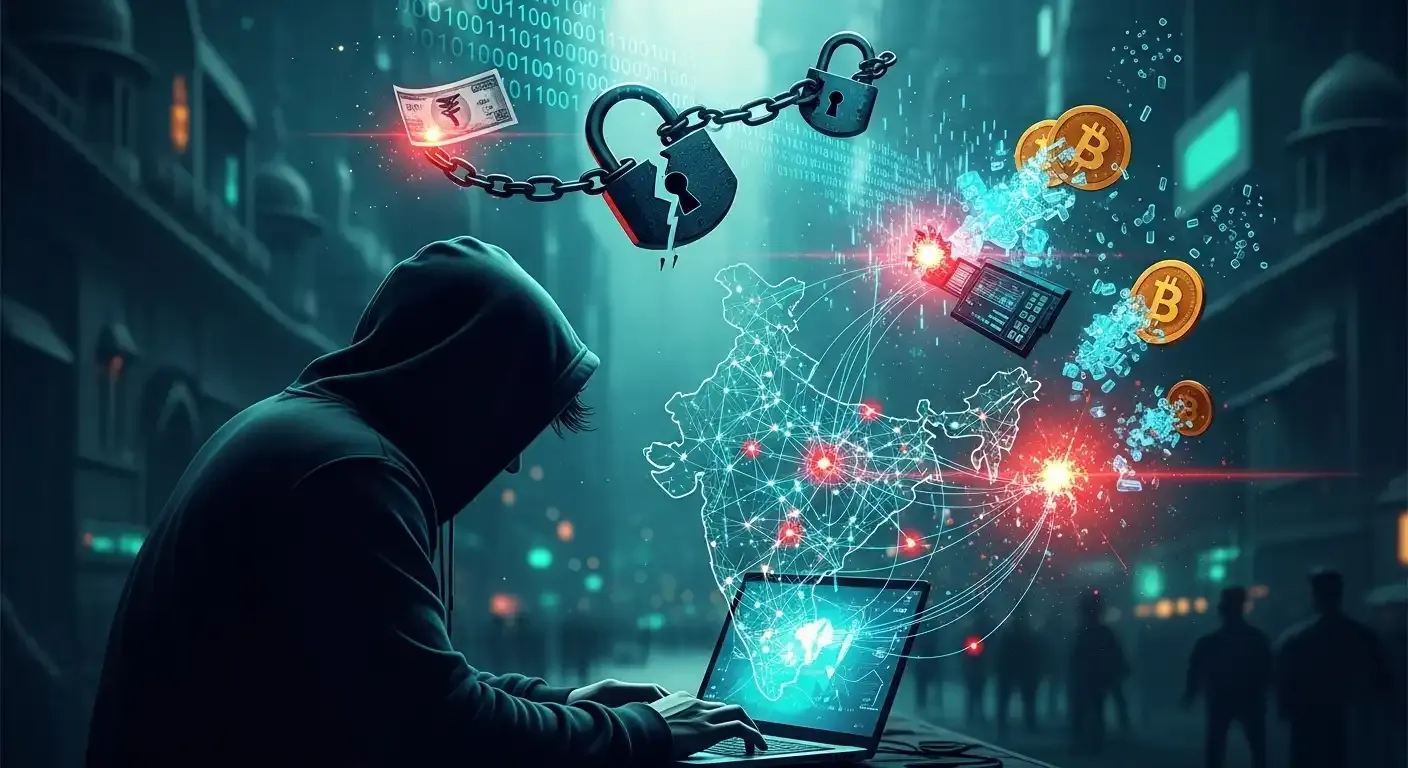
The landscape of cyber crime in India has evolved into a highly organised, billion-dollar illicit industry. At Sprite Genix, we understand that as digital adoption accelerates, the sophistication of digital threats grows parallel to it. In 2024 alone, over 36 lakh complaints were registered regarding cyber fraud, with an estimated ₹500 to ₹60,000 crore stolen from unsuspecting citizens. This staggering figure is larger than the GDP of several small nations, highlighting a severe crisis in digital security.
Whether you are a multinational corporation, a local business, or an individual user, understanding the mechanics behind these frauds is the first step toward safeguarding your digital assets. As a leading voice in technology and digital security, Sprite Genix is here to dissect the anatomy of these massive cyber crimes in India and provide actionable, data-driven insights.
The Anatomy of Modern Cyber Crime in India
The sheer scale of cyber crime in India is fuelled by a combination of fear and greed. Cyber criminals have mastered human psychology, exploiting our core emotions to execute devastating financial frauds. A significant portion of the money leaving India today is driven by investment scams where users are promised rapid wealth.
Criminal gangs often operate from outside the country such as in Dubai, Hong Kong, China, or Vietnam creating fake trading and banking applications. They collaborate with local influencers who promote these fraudulent apps on social media, promising high daily returns. Users are initially given small monetary bonuses to build trust. However, once they invest substantial amounts, the criminals freeze withdrawals, demand fake "taxes" to release the funds, and eventually empty the user's accounts entirely.
How Data Breaches and the Dark Web Fuel the Fire
A major catalyst for cyber crime in India is the unchecked proliferation of data breaches. When companies suffer from data breaches either through exploited software bugs or insider threats massive troves of user information are leaked. This is where digital security measures make or break a business.
This stolen information is immediately taken to the dark web, a hidden corner of the internet inaccessible via standard web browsers, which serves as a sanctuary for cyber criminals. Data brokers on the dark web sort this information meticulously, segregating users by nationality, gender, and VIP status.
Why does this matter? Because your data tells a story. From your medical records and taxi bookings to your hotel check-ins, criminals use this detailed history to build a "game of trust". When a scammer calls you knowing exactly what you ordered online six months ago, you are much more likely to trust them. This weaponisation of data breaches makes robust digital security protocols non-negotiable for modern enterprises.
The Threat of Digital Arrests and Deepfake Sextortion
Beyond financial investment scams, cyber crime in India has taken a dark, psychological turn. Fraudsters frequently utilise Voice over Internet Protocol (VoIP) calls combined with VPNs to mask their IP addresses and locations.
Two of the most prominent tactics currently terrorising citizens include:
• Digital Arrests: Scammers use the display pictures of police officers and call victims, claiming their family members are involved in illegal activities. By creating panic, they extort massive sums of money to "settle" the fake case.
• Deepfakes and Sextortion: Criminals dissect normal images frame by frame, applying them to pornographic videos to create highly realistic deepfakes. Victims are then blackmailed with the threat of these videos being sent to their families and followers.
Why Law Enforcement Struggles to Keep Up
Despite the tremendous efforts of law enforcement agencies, the infrastructure supporting digital security and cyber crime in India remains strained. When victims attempt to file First Information Reports (FIRs), they often encounter officers who lack the technical knowledge to properly document digital evidence.
Furthermore, the legal chain of custody for electronic evidence is incredibly complex. Currently, under Section 79A of the IT Act, there are only 15 to 16 notified government forensic laboratories in India. This severe shortage results in immense pendency, with roughly 25,000 to 30,000 cases backlogged per lab, meaning it can take over a year just to analyse a single device.
To evade detection, criminals continuously bypass standard security measures. While the Indian government successfully transitioned SIM card regulations from easily forged paper KYC to digital KYC, and finally to strict biometric KYC, criminals adapted. Today, they rent or buy "mule accounts" and valid SIM cards from poor individuals on a commission basis, allowing them to launder money through crypto-currency and shopping vouchers without leaving a direct paper trail.
The Sprite Genix Blueprint: Implementing a Zero Trust Policy
At Sprite Genix, we advocate for a proactive approach to digital security. The most effective defence against cyber crime in India is the adoption of a "Zero Trust Policy".
Just as you would not open your front door to four masked strangers at 1:00 AM, you must not entertain unknown entities online. This means strictly verifying:
• Unknown Callers
• Unknown Links
• Unknown APK Files
• Unknown Websites
If you or your business falls victim to a scam, the government's 1930 cyber helpline acts as the critical "first aid" for financial fraud, immediately attempting to freeze the transferred funds. However, prevention remains the ultimate cure.
Cyber crime in India will only continue to scale as technology advances. Businesses must invest heavily in securing their infrastructure against data breaches, while individuals must remain vigilant against social engineering traps. Partnering with a dedicated tech agency like Sprite Genix ensures that your digital footprint remains secure, encrypted, and resilient against the ever-evolving tactics of modern cyber criminals.
FAQs
1. What is the most common cause of cyber crime in India?
The most common causes are social engineering and the "greed factor," where criminals trick users into investing in fake trading apps for quick returns, ultimately stealing their money.
2. How do data breaches affect my personal digital security?
Data breaches leak your personal history, purchasing habits, and contact details to the dark web. Criminals use this exact information to build trust and execute highly targeted phishing and extortion scams.
3. What is a "digital arrest" scam?
A digital arrest scam occurs when fraudsters pose as law enforcement officers via phone or video calls, claiming you or a loved one is involved in a crime, and demand an immediate ransom to drop the fake charges.
4. What should I do immediately if I face cyber fraud?
Treat the national cyber helpline (1930) as your digital first aid. Call 1930 immediately to report the fraudulent transaction and then visit your local police station to file a formal complaint.
5. How can businesses protect themselves from the dark web? Businesses must adopt a Zero Trust policy, ensuring robust endpoint security, regular employee training against phishing, and secure application architectures to prevent the data breaches that feed the dark web.
Don't wait until your business becomes another statistic in India's massive cyber fraud epidemic. At Sprite Genix, we specialise in building bulletproof digital infrastructures and advanced web applications designed to withstand modern cyber threats. Contact Sprite Genix today to fortify your digital security and protect your enterprise from devastating data breaches!
Category: Cyber Threats & Digital Security